
A bicycle wholesale price does not tell a retailer what it will earn. The buyer must distinguish markup from gross margin, then read rebates, dealer tiers, and payment terms as separate parts of the offer. A Reddit industry discussion from August 2024 raised these questions directly, but its comments are individual estimates, not an industry benchmark.
This guide helps bicycle retailers and distributors compare wholesale programs without treating a stated discount as guaranteed profit. It focuses on dealer economics; for shipment cost, see Tyride’s separate guide to factory-direct versus distributor landed cost.
Key takeaways
- Markup is measured against cost; gross margin is measured against selling price.
- A rebate changes net cost only when its conditions are met and the credit is received.
- Compare dealer programs at the same model, quantity, payment timing, and service level.
- Keep inventory risk and sell-through separate from the quoted margin.
The Reddit case: a question about markup and rebates
In a Reddit Q&A on August 20, 2024, a participant asked about the retail markup over wholesale price and whether retailers receive rebates. A reply estimated a 35% to 40% markup, while noting that terms vary by brand, dealer level, and bicycle type. The commenter said rebates could take the form of bikes or frames for the dealer. Read the Reddit discussion.
That answer is useful as a list of questions to ask. It is not audited pricing data, a universal margin range, or a statement about every bicycle-parts supplier. The value and timing of a product rebate can differ from cash, and a retailer may not earn the quoted return if the stock does not sell.
Markup and gross margin use different denominators
Markup is the amount added to cost, divided by cost. Gross margin is sales revenue less cost of goods sold, divided by sales revenue. Both figures can describe the same transaction, but they are not the same percentage.
For example, if a retailer buys an item for $100 and sells it for $140 before other costs, the markup is 40%: ($140 - $100) ÷ $100. The gross margin is about 28.6%: ($140 - $100) ÷ $140. The calculation excludes freight, discounts, payment fees, labor, rent, returns, and taxes.
Use the formula that answers the actual question. When a buyer hears “40%,” ask whether it means markup, gross margin, a discount from list price, or a rebate earned after a target. Record the denominator and exclusions next to the number.
Treat rebates as conditional value
A rebate may depend on annual volume, product mix, payment timing, sell-through, or a future order. A product credit also differs from cash: it can only help if the retailer wants and can sell the credited goods.
Illustrative example: A retailer buys at $100 and sells at $140. If a confirmed $10 cash rebate is earned and received, the net cost for the margin calculation becomes $90, so the gross margin is about 35.7% before other costs: ($140 - $90) ÷ $140. If the rebate is conditional and the target is missed, the cost remains $100 and the margin stays about 28.6%. Do not put a pending rebate into the base case.
| Offer element | What to confirm in writing |
|---|---|
| Base wholesale price | Model, specification, quantity tier, and validity date |
| Dealer tier | Qualification rules and whether tier can change mid-season |
| Rebate | Trigger, calculation base, form of payment, timing, and expiry |
| Payment terms | Deposit, due dates, currency, and any credit cost |
| Returns or exchanges | Eligible products, deadlines, restocking charges, and exceptions |
| Support | Training, warranty handling, spare parts, and delivery commitments |
The U.S. Small Business Administration’s break-even guidance distinguishes unit contribution from fixed costs; the same separation helps a retailer avoid mistaking a gross margin for net profit. Use the SBA break-even point resource for the general calculation framework. For parts resale and refurbishment economics, see Tyride’s wholesale parts pricing guide.
Compare the whole dealer program
A higher discount can come with higher minimum purchases, pre-season commitments, limited returns, or product concentration. A lower discount can still work better if the retailer can reorder smaller amounts, sell across more models, or receive more useful service support. Compare the expected cash outflow and inventory exposure alongside the percentage.
For a simple comparison, model three cases:
- Base case: no rebate, using planned sell-through and payment timing.
- Earned case: apply only rebates with clear, achievable conditions.
- Downside case: slower sales, a missed rebate, or a product that needs markdowns.
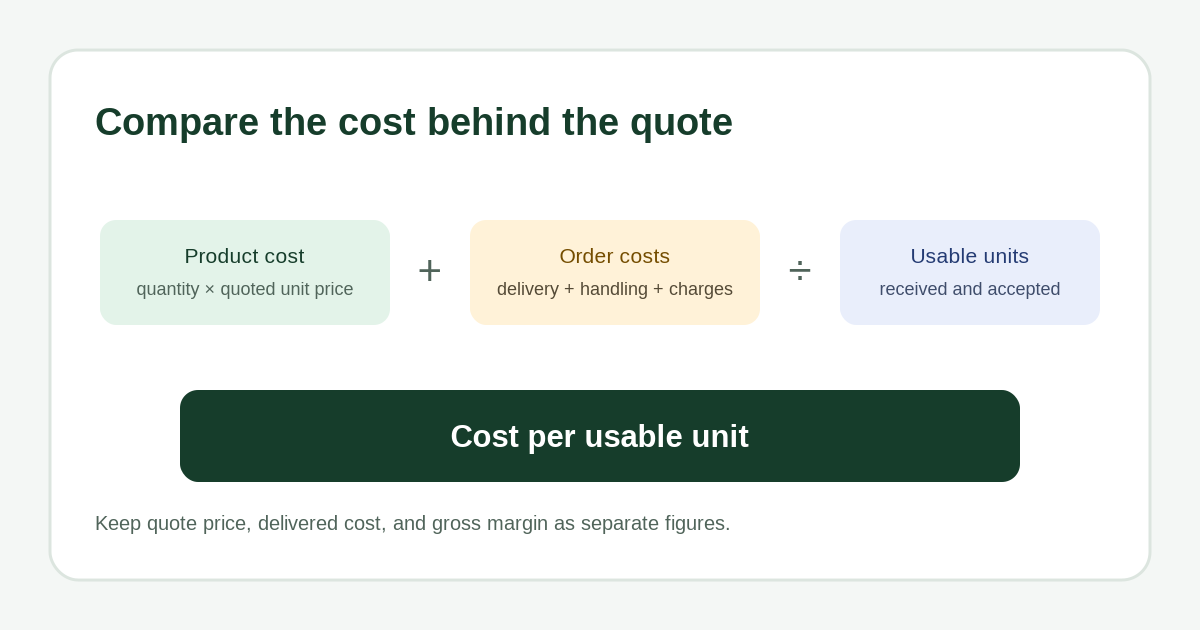
Keep assumptions visible. Do not assume all stock will sell at full retail price, and do not count the same benefit as both a discount and a rebate. For the landed shipment cost and trade-term responsibilities, refer to the U.S. International Trade Administration’s landed-cost guidance and confirm the destination-specific rules with a qualified adviser.
A buyer’s checklist for wholesale terms
Before comparing two offers, confirm that they cover the same product, model year, order quantity, delivery scope, payment schedule, service, and remedy. Then calculate markup and gross margin separately. List every rebate as pending until earned. Finally, check whether the required inventory depth fits the shop’s own sales plan.
If you are sourcing bicycle components rather than complete bikes, send the exact SKU list, forecast quantity, destination, and branding requirements to Tyride. Tyride’s component sourcing service describes its current service scope; confirm project-specific prices and terms in writing.
Evidence note: The 35% to 40% figure and rebate comments come from one Reddit participant and are not an industry average. Dollar examples are hypothetical arithmetic. SBA guidance supplies general break-even concepts, not bicycle-specific margin data. For company background, see About Tyride.