
A wholesale bicycle component catalog should help a buyer select a part that fits a known assembly. When two reseller pages show different dimensions for the same item, the buyer cannot resolve the conflict by comparing prices. For brands, distributors and bike shops, the safest purchasing unit is a verified SKU and revision for a defined bicycle or repair application, supported by maker documentation and a physical sample where fit matters.
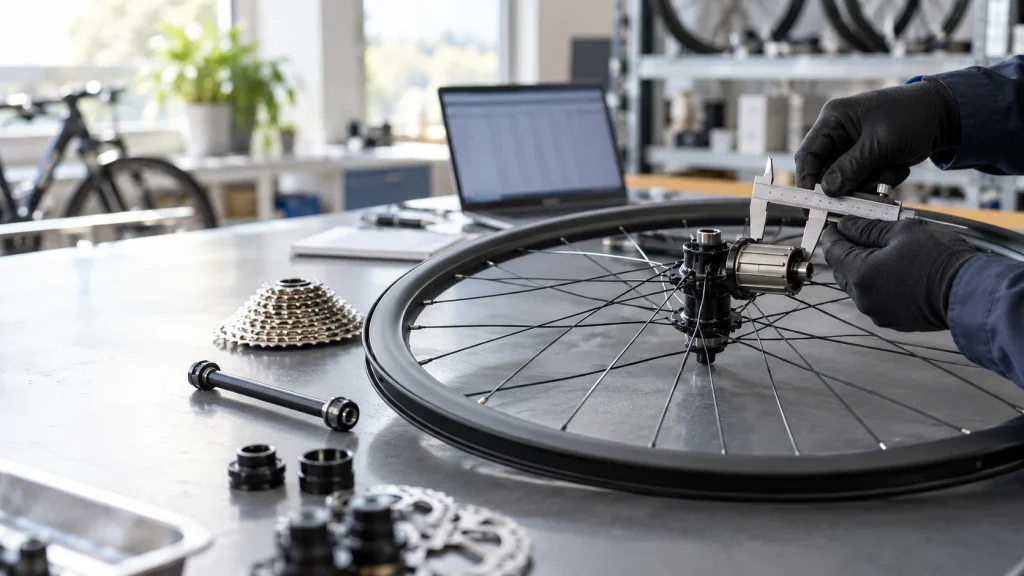
Illustrative image generated for this article. It is not a photograph of the Reddit poster’s wheel or a QBP product.
Key takeaways
- A July 2026 wheel-buyer thread reported conflicting reseller rim-width descriptions for a wheel under the same product-number family. The poster sought one replacement wheel, not a bulk order.
- The discussion shows a problem that scales to bulk purchasing: incomplete or inconsistent catalog fields can create wrong-item orders and rework.
- Capture the maker’s exact part code, technical document revision and installed sample approval before repeating a wholesale order.
This guide uses three terms:
- Wholesale catalog data is the set of product fields a shop or distributor uses to select and order a component.
- Approved SKU is a specific part code and revision accepted for a named bicycle or repair use.
- Technical hold is a pause in purchasing while a fit or specification conflict is resolved.
What happened in the replacement-wheel discussion?
In “Where to buy ONLINE 135mmx10 REAR wheel/rim in US (V-brakes,cassette)”, the buyer described a 2012 Specialized Crosstrail and asked where to find an inexpensive rear wheel in the United States. The requirements included a rim-brake-compatible rim, the relevant rear-hub spacing and a suitable freehub. Later updates said different reseller listings gave different rim-width information for the same Quality Wheels part numbers. One commenter explained that QBP supplies shops rather than selling directly to consumers. QBP describes itself as a wholesale distributor to independent bicycle shops.
This is one consumer’s report of a listing conflict, not a confirmed error in QBP’s master data. The professional takeaway is the verification path: identify the exact candidate SKU, compare the brand or maker’s controlled specification with the reseller listing, and test the assembly before ordering it repeatedly.
Original analysis: The same missing rim-width field has different costs for two buyers. A single consumer may need to return one wheel; a shop or distributor could copy the error across a repeat order. That scaling risk is an inference from the one-wheel Reddit case, not a measured defect rate.
Separate channel information from technical approval
A distributor listing may answer whether an item is available and how to order it. It may not settle every compatibility question. The original component maker’s dealer manual, product specifications and service instructions should be the technical baseline. Shimano’s technical-document portal makes dealer manuals available for professional mechanics, and its hub dealer manual directs readers to detailed specifications for each hub.
For finished bicycles sold in the U.S., the Consumer Product Safety Commission’s bicycle guidance points to requirements in 16 CFR Part 1512, including wheel and wheel-hub provisions. That makes accurate component records useful for compliance work as well as purchasing. The rule’s application to any particular bike must be checked separately.
For a rear wheel, a purchasing sheet should capture the fields that affect the actual bicycle, not just “700C rear wheel.” The exact fields depend on the build, but the following checklist is a useful starting point.
| Catalog field | Buyer verification question | Evidence |
|---|---|---|
| Maker, model, SKU, revision | Is this the exact version being offered? | Manufacturer document and labeled sample |
| Wheel diameter and rim | Does the rim fit the intended tire and braking system? | Rim and tire maker specifications |
| Hub and axle interface | Does it fit the frame dropouts and retention system? | Frame and hub documents; installed check |
| Freehub and cassette interface | Is the intended cassette approved for this body? | Drivetrain maker compatibility document |
| Brake interface | Is it built for the intended rim or disc brake assembly? | Maker’s wheel and brake documentation |
| Packaging and shipping | Will the wheel arrive protected and correctly identified? | Approved packing sample and label |
| Substitution policy | Can a reseller or supplier change the rim or hub? | Written change-control clause |
Tyride’s existing bicycle parts compatibility checklist expands this approach across cranks, brakes, wheels and saddles. It makes a useful companion to the catalog-field checklist here.
Build one source-of-truth record per approved item
Give every candidate part a record that links its supplier quote, current maker document, technical drawing or specification sheet, sample label, inspection result and approved bicycle application. If a marketplace page and a brand document conflict, mark the purchase on hold until the discrepancy is resolved in writing. Do not choose the more convenient value or infer that the listings describe the same revision.
For example, if one seller lists a rim width and another gives a different figure for what appears to be the same SKU, save both listings. Ask the maker which revision each describes. The buyer then tests a labeled sample on the intended bike. Consider the second scenario: a supplier offers a new hub under the same wheel name. That is a change to the assembly, so the old approval does not carry over without review.
For a production buyer, approval should be tied to a build or platform. For a shop, it can be tied to a service application and relevant model years. Either way, a new part number, rim change or hub change calls for review before substitution. Photos and measurements of the received sample help the buyer recognize a later unannounced change.
This process also improves the next purchase. The buyer can compare a repeat shipment with a signed baseline instead of reopening the entire compatibility question. Tyride’s low-cost parts supplier-check guide explains why source identity, sample approval and a controlled revision should accompany a quote.
The record needs a date as well as a SKU. Shimano’s versioned hub dealer manual shows why document identity matters: a buyer must know which instructions were used when the sample was approved. The July 2026 wheel discussion shows what happens when a listing is hard to reconcile with another listing. The practical response is to stop and ask for the controlled maker specification.
Use a hold, test, approve workflow
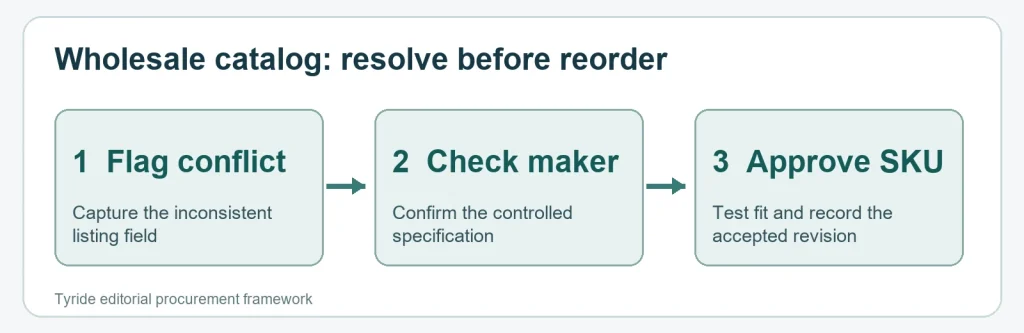
- Hold the conflicting listing. Save screenshots or documents showing the discrepancy and identify which field affects fit.
- Ask the maker or authorized technical channel. Request the exact SKU, revision and written answer for the intended assembly.
- Order a traceable sample. Keep its label and packaging with the technical record.
- Check the assembled bicycle. A qualified mechanic verifies fit, retention, braking and drivetrain operation using applicable maker instructions.
- Approve narrowly. Record the exact bicycle application, approver, document versions and inspection result. Do not extend approval to a different frame or drivetrain by assumption.
- Control replenishment. Require suppliers to notify the buyer of component, source or revision changes before shipping a substitute.
This sequence takes effort, but it gives the purchasing team a clear answer when a quote says “equivalent.” Equivalent for which bicycle, with which evidence, and approved by whom?
What should a sourcing RFQ include?
Send the existing bicycle or assembly data, the candidate part code, the conflicting fields, required quantity, target market, inspection method and an explicit request for the maker’s current technical document. State that the offer must list substitutions and revisions. This is more precise than asking a supplier for a “compatible rear wheel.”
Tyride supports component sourcing and order coordination. If your purchasing team has a wheel or other component specification to review, send the assembly details and documents to Tyride and request a sample-led quotation.
Frequently asked questions
Can a distributor’s catalog listing establish compatibility by itself?
It can identify a candidate, but it should not be the only evidence when fit or safety depends on exact interfaces. Verify against the component maker’s current technical documents and an installed sample where appropriate.
What if two sellers list different dimensions for the same part number?
Pause the order, obtain the maker’s controlled specification and confirm the exact revision. Keep the resolution with the SKU record so the next buyer does not repeat the same investigation.
Is this a report of bulk demand on Reddit?
No. The July 2026 thread was a consumer’s single-wheel search. This article applies the documented data problem to professional purchasing; it does not count the post as a B2B lead.
Research methodology: Our narrow 20-day Reddit review found three verifiable related posts. This article analyzes one buyer-reported catalog conflict, then checks QBP’s own wholesale description, maker documents and U.S. bicycle guidance. It does not verify the disputed dimensions or approve a wheel for the posted bike. Content reviewed 25 October 2026. About us.