
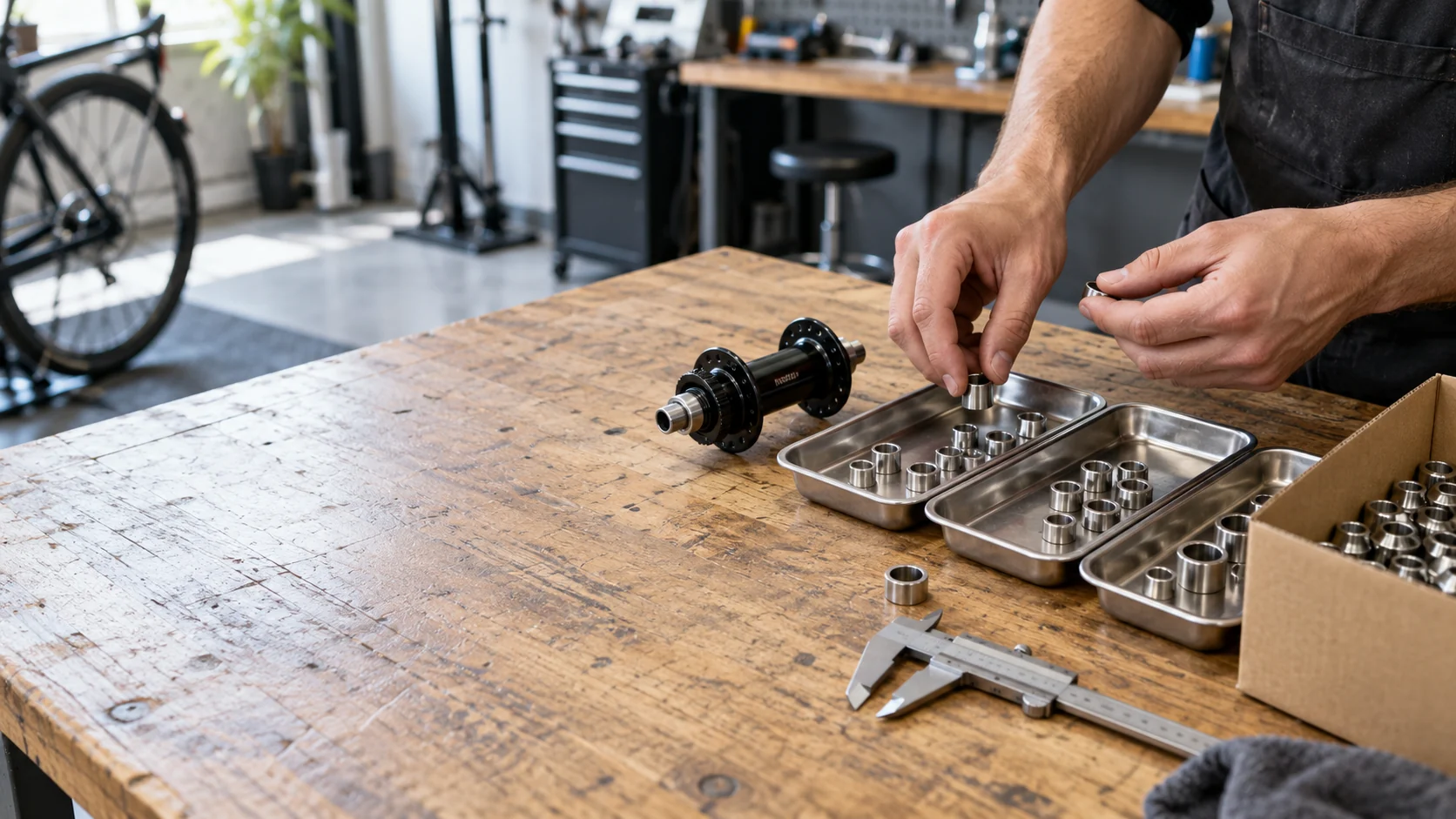
Bulk bicycle small parts are easy to underestimate. A washer, axle spacer or similar low-cost item may occupy little shelf space, yet the wrong thickness or inner diameter can stop a repair or leave a shop with a box it cannot use. For shop owners, distributors and purchasing teams, the useful question is not simply how cheap is a pack? It is how many approved, usable parts will this order provide for the bicycles we service?
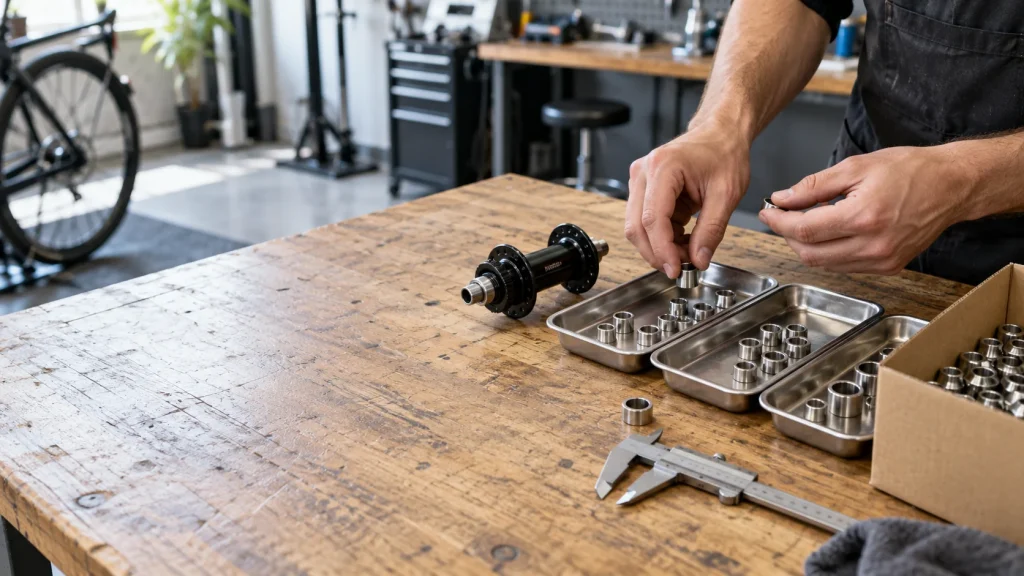
Illustrative image generated for this article. It does not depict the Reddit poster’s shop or the named supplier’s product.
Key takeaways
- A July 2026 bike-mechanic discussion described stainless axle spacers sold in packs of 100 at about US$0.16 each shipped. That is one shop’s reported offer, not a market price.
- Confirm dimensions and the complete hub assembly before buying volume. A nominally similar washer is not automatically an approved substitute.
- Compare delivered usable cost, replenishment and inspection time alongside the quoted unit price.
Three terms keep the buying decision clear:
- Bulk bicycle small-part procurement is the repeat purchase of low-cost parts for a defined set of repairs or builds.
- Approved assembly is a specific hub or wheel build that has passed the buyer’s documented fit check.
- Delivered usable cost is the full order cost divided by the parts that pass inspection and can be used.
What did the 100-pack axle-spacer discussion reveal?
In “An affordable axle spacer solution!”, a mechanic described finding thin stainless spacers for hub axle work through an industrial supplier. The post listed two part numbers, 0000-101700 and 0000-103969, with reported thicknesses near 0.5 mm and 1.5 mm. The author said they were available in 100-piece packs for roughly US$0.16 per piece shipped. Commenters suggested alternatives, including salvaging parts from old hubs and using standard industrial washers.
This is a useful purchasing example because it includes a real repair task, approximate dimensions, pack size and price. It does not establish that either industrial part fits every hub. The author explicitly noted that a 10 mm axle would require extra work to enlarge the inner diameter. A shop should verify fit before adopting that part for a particular repair.
Original analysis: The most useful detail in this thread is the stated pack size paired with a stated repair use. Price alone would be a weak lead. Together, quantity and use allow a buyer to write a sample test and a repeat-order rule. This inference is based on the single dated thread; it is not a survey of shops.
Define the repair before comparing packs
Start with the hub model and the job the part must perform. In the Reddit case, the spacer sits between a cone and locknut to help correct axle spacing. Record the original component stack and the target dimension after assembly. A buyer should also record the axle diameter, the required inner and outer diameters, thickness and acceptable tolerance of a candidate spacer.
The approval decision belongs to the assembly, not just the loose part. If changing a spacer affects bearing adjustment, locknut engagement or wheel retention, a mechanic must check the assembled wheel against the relevant maker instructions. Shimano’s dealer manuals are one example of manufacturer documentation intended for professional mechanics. Where a maker specifies a service part, follow its documentation or obtain written technical approval for an alternative.
| RFQ field | Why it matters | Evidence to retain |
|---|---|---|
| Bicycle or hub application | Prevents a generic part being approved for every build | Model code and service document |
| Inner diameter, outer diameter, thickness | Determines whether the part seats and spaces correctly | Controlled drawing and measured samples |
| Material and finish | May affect corrosion and wear behavior | Supplier specification and lot identity |
| Pack quantity and packaging | Affects counting and workshop handling | Labeled pack sample |
| Revision and substitution rule | Stops a silent change after approval | Purchase-order requirement |
| Inspection method | Makes acceptance repeatable | Sample record and inspection sheet |
For a broader approach to fit, use Tyride’s bicycle parts compatibility checklist. It explains why a catalog listing should lead to a documented sample check rather than directly to a volume order.
Calculate delivered usable cost
The reported US$0.16 is interesting, but a quote should be compared on the same basis across suppliers. One practical measure is:
Delivered usable cost per part = (part cost + freight + import charges + inspection + expected rework) / accepted usable quantity.
For example, 100 pieces at the Reddit poster’s reported US$0.16 each would total about US$16 if that price still applied. If ten pieces failed a buyer’s own fit check, the simple part cost would be US$16 divided by 90 accepted pieces, or about US$0.18 each. This is a hypothetical calculation, not a reported defect rate. Consider a second supplier whose unit quote is higher but whose approved parts need no rework; compare both on the same delivered usable basis.
This is a decision tool, not a forecast. A shop buying one pack locally may value immediate availability more than the lowest nominal price. A distributor placing repeat orders may care more about a documented revision, lot traceability and replenishment time. If a batch needs manual alteration, include the labor and the risk of inconsistent results before calling it cheaper.
Ask suppliers to quote the same drawing and quantity break. A comparison should identify the invoice entity, production source where relevant, shipping term, packaging, lead time and process for nonconforming parts. Tyride’s supplier-check guide for low-cost bicycle parts gives a fuller set of questions for supplier qualification.
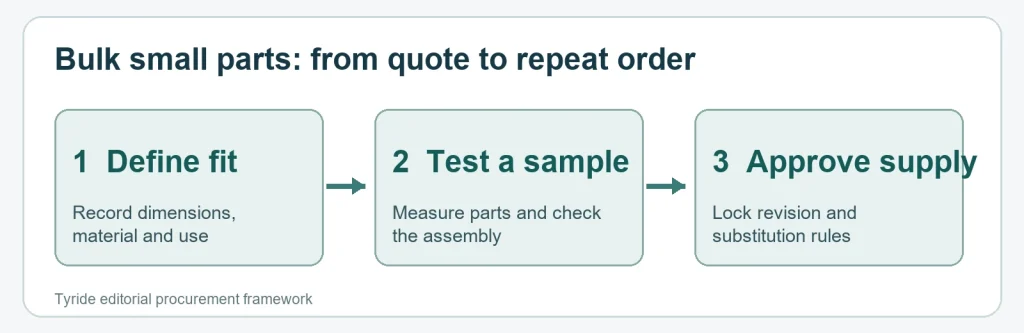
Run a small approval before a large reorder
- Get a labeled sample. Match its part number and revision to the offer.
- Measure several pieces. Check critical dimensions against the drawing and record the tool and method used.
- Test the intended assembly. Have a qualified mechanic install the candidate on the specific hub or wheel application, then inspect the completed repair under the maker’s procedure.
- Document exceptions. If a part needs filing, machining or any other modification, treat the modified result as a separate approved process, with its own labor and acceptance criteria.
- Approve the repeat order in writing. Tie future deliveries to the tested specification and require prior approval for changes in dimensions, material or source.
The same sequence applies to bearings, fasteners and other inexpensive bicycle components, although the technical checks will differ. For safety-relevant parts, the approval process should reflect the consequence of failure; a low purchase price never removes the need for technical review.
For complete bicycles sold in the United States, the U.S. Consumer Product Safety Commission’s bicycle guidance points to 16 CFR Part 1512 and its requirements for bicycles. A sourcing team should check the rules that apply to its finished product and target market. This sentence does not assert that a loose washer has a stand-alone CPSC certification.
What should a bulk-parts buyer send to a sourcing partner?
Send the application, existing part code or drawing, critical dimensions, target order quantity, annual usage estimate, target market and acceptance method. Add photos of the original assembly if the drawing is incomplete. These details allow a supplier to identify the correct candidate and state any exceptions before quoting.
Tyride provides bicycle component sourcing support alongside saddle manufacturing. If your team needs a quote for a controlled small-part specification, send Tyride the drawing and order plan. Request samples and technical evidence before approving a bulk order.
Frequently asked questions
Does a 100-pack price prove a part is suitable for shop use?
No. The pack size and price describe an offer. Suitability depends on the exact dimensions, material, assembly fit and the manufacturer’s service requirements. The Reddit axle-spacer case is a sourcing lead, not a universal fit approval.
Can an industrial washer replace a bicycle-branded spacer?
Only after a qualified person verifies the specific application and complete assembly. Similar nominal dimensions alone do not establish interchangeability.
What belongs on the first purchase order?
Include the controlled drawing or SKU revision, material, packaging, approved sample reference, quantity, delivery term, inspection criteria and written substitution rule. That record makes the next delivery comparable with the first.
Research methodology: Our narrow 20-day Reddit review found three verifiable related posts, but only one stated a bulk pack quantity and price. This article analyzes that one shop discussion and checks its sourcing question against manufacturer service documents and CPSC guidance. The sample is too small to estimate market demand. Tyride did not inspect the cited product, and the reported price may have changed. Content reviewed 25 October 2026. About Tyride.