
An e-bike fleet pilot is a limited trial used to check a bike and its support plan before a larger order. It should answer a defined set of questions before the next purchase order is released. An acceptance gate is a written check the order must pass before it can move to the next stage. Buyers need evidence about rider fit, route performance, charging, maintenance, parts availability and supplier consistency. A pilot is useful when it changes the next decision; it is not simply a smaller version of the full order.
A phased approach can reduce the risk of committing to an unproven configuration, but only if each phase has clear acceptance criteria and commercial terms. The buyer should agree on what is being tested, what counts as a pass, and what changes would trigger a revised specification or a pause.
Key Takeaways
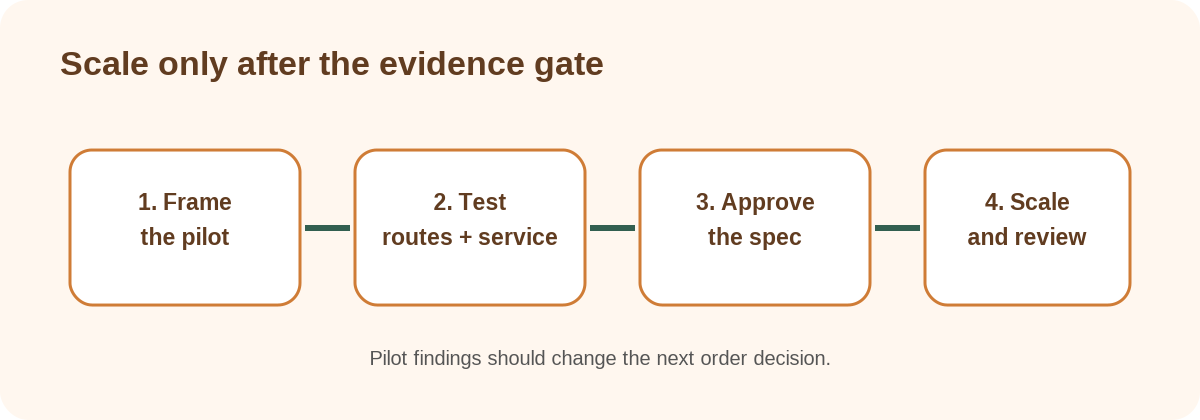
- Define pilot questions and acceptance gates before requesting trial bikes.
- Test representative routes, payloads, riders, charging and service conditions.
- Record the approved specification and its revision before scaling production.
Choose pilot questions that can change a purchasing decision
Start with the uncertainties that could make the first configuration unsuitable. A delivery operator may need to test payload stability, range over a shift, charging turnaround or repair access. A rental or shared fleet may need to test theft resistance, station or lock compatibility, battery handling and rider access. Keep the pilot focused enough that the results can be reviewed before the production decision.
Create a test plan that names the route, load, environmental conditions, test duration, responsible rider or mechanic, and data to capture. Define a failure process for safety issues. Separate product defects from setup errors, training gaps, normal wear and route-specific problems; each cause has a different corrective action.
Use the right participants. Riders can assess fit and handling. Mechanics can judge service access, diagnostic steps and replacement times. Operations staff can evaluate charging, storage, dispatch and reporting. Procurement should attend the review so the approved changes flow into the final specification and contract.
Use staged orders to test more than the product
A staged purchasing plan tests production and supply as well as the bicycle itself. Confirm whether a supplier can reproduce the approved sample, maintain the same materials and components, meet the delivery window and provide replacements in the quantities required. Ask how a product revision will be communicated and approved.
A January 2024 LinkedIn post from a delivery-bike operator described a planned expansion from 20 active riders to 100 by the end of January, followed by a second production round intended to add another 100 by the end of March. The post also cited rider feedback about comfort and a battery-swap process. These figures describe the operator’s stated plan, not verified later results. The useful lesson is to connect each production phase to operational validation: rider feedback, service process, supply readiness and expansion timing should be reviewed together. Read the LinkedIn post.
Put phase gates in the purchase documents. For example, the next release may depend on sample approval, documented inspection, confirmed production capacity, delivery of agreed spare parts and resolution of any critical pilot issue. This is a planning framework, not a universal rule; the right gate depends on how much uncertainty the fleet still carries. Specification control means recording the approved design and checking any proposed change before production.
Measure rider experience alongside downtime and repair data
Rider comfort matters because a fleet bike is part of a workday, but a pilot should make feedback specific. Ask riders when discomfort appears, which route or posture triggers it, whether the saddle moves or creaks, and what changes improve fit. Combine interviews with maintenance records and a consistent review form so one enthusiastic or dissatisfied rider does not determine the specification alone.
A Reddit discussion about a January 2024 winter bike-share pilot shows how service availability can change personal purchase decisions: one rider said they might skip buying a separate winter bike if the shared winterized fleet continued. The post is anecdotal and cannot establish broader demand. It does, however, suggest a pilot question for seasonal operators: do riders keep using the fleet in the conditions the program intends to serve, and what maintenance burden follows? Read the Reddit thread.
Track practical measures such as completed shifts, out-of-service time, repair causes, parts wait time, battery turnaround, rider-reported fit issues and the number of bikes unavailable when needed. Avoid inventing a benchmark before collecting the baseline. Set a review date and use the observed data to decide whether to scale, adjust the configuration or run a targeted second test.
Lock down specification control before repeat orders
Once the pilot configuration is approved, preserve it in a controlled record. Include model and revision, bill of materials, key dimensions, approved components, colors, branding, packaging, inspection method, acceptance criteria, and responsible signatories. Require written approval before a supplier substitutes a component or material that could affect fit, durability, serviceability or compliance.
This is especially important for high-touch or fit-sensitive components such as saddles. Tyride’s bicycle saddle OEM specification guide explains the variables a buyer can specify across geometry and construction. Buyers can compare existing options in the bicycle saddle product range and review Tyride’s sourcing support when a project includes multiple component categories.
Before approving a repeat order, ask whether the same sample, tooling, material source, production process and inspection plan will apply. Confirm minimum quantities by model, color or branding version, and price each version as quoted. Tyride’s bulk saddle purchasing guide covers MOQ, sample approvals and cost trade-offs for saddle orders.
Review supplier performance after every phase
At each phase review, compare promised and actual delivery dates, acceptance issues, corrective actions, warranty response, parts availability and change-control compliance. Keep open issues visible in the next order decision. If a supplier cannot provide a replacement component quickly, the fleet may need a different spare-parts arrangement even if the bike itself passed the pilot.
Public procurement cases show that service architecture can be as consequential as the initial equipment. Los Angeles Metro’s 2024 bike-share contract included a transition period, operations and maintenance obligations, new charging infrastructure and performance measures. Its report also described the fallback cost implication if planned in-dock charging could not be implemented. The case supports a broader planning principle: identify dependencies and fallback paths before scaling. See the Metro contract report.
The UK Department for Transport’s e-cargo bike grant evaluation also shows why follow-up belongs in the pilot plan. The scheme funded 103 organisations to procure 197 bikes, but the survey had 45 responses; the report therefore provides useful implementation evidence with a clear response-rate limitation. Buyers can use the same discipline internally: define who will report results, collect records after delivery, and state how missing or incomplete data will affect the scale decision. Read the DfT evaluation.
A pilot-to-scale plan is successful when the next order is based on documented evidence and the supplier can reproduce the accepted configuration. For the complete purchase sequence, see the commercial e-bike fleet checklist; public programs can also compare bike-share contract planning. For component development or coordinated sourcing, learn more on About Tyride and send the model, application, target quantity, specification and delivery window through the contact page.
E-bike fleet pilot decision checklist
Before releasing the next order, the project team should be able to answer:
- Which pilot questions were answered, and which remain open?
- Did representative riders and mechanics test realistic routes and loads?
- What did downtime and repair records show, and what caused the interruptions?
- Is the approved sample documented as a controlled specification and revision?
- Can the supplier confirm production capacity, delivery dates and replacement parts?
- Are the next phase’s acceptance gates and commercial assumptions in writing?
If these answers are documented, the next order can scale a tested operating model rather than simply repeat a promising demo.
Research method: This guide uses a company-authored LinkedIn update as an example of a stated scale-up plan, a Reddit rider post as a single-user seasonal-use signal, and a Los Angeles Metro procurement report for service dependencies. The LinkedIn page does not expose its exact publication date; the stated end-January and midyear 2024 schedule is the date clue. These sources do not provide a universal fleet pilot threshold.
Editorial note: Tyride’s editorial team reviewed each example against the linked source. Planned quantities, user comments and public-contract features are described with their original context.