
How Brands and OEM Buyers Should Specify Bicycle Saddle Shape
For most bicycle brands and OEM buyers, saddle shape should be specified before width, padding or rail material. Shape determines where the sit bones and soft tissue contact the platform, how the pelvis rotates under load, and whether the rider can shift freely or remains planted. In practical product development, T-shape suits dynamic riders who change position frequently, V-shape supports endurance use with continuous cradling, and short-nose designs benefit aggressive or modern road and gravel postures that need a defined seating zone. Once the shape family is validated against the target rider persona, width ranges and padding density can be optimized around it. Specifying the reverse order—starting with width or foam—commonly produces the same comfort complaints across multiple size options and increases returns and warranty risk.
This sequence is not consumer advice restated for industry. It is the decision order that reduces tooling iterations, clarifies supplier briefs, and lowers the chance that a production sample will fail structured test rides. The following sections explain the mechanical reasons behind each shape family, map them to rider personas, show how manufacturing choices follow from geometry, and provide the questions buyers should ask before locking molds or placing volume orders.
Why Shape Comes Before Width and Padding
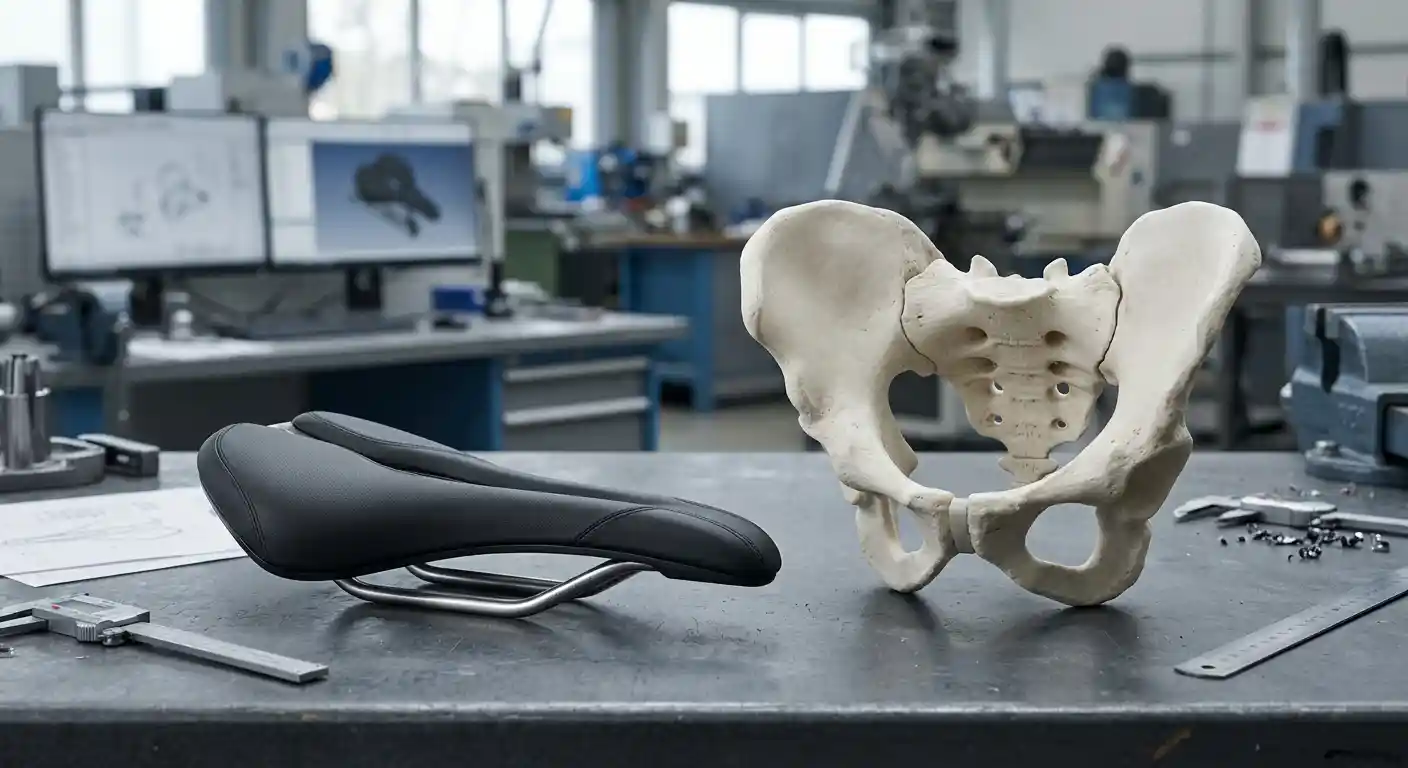
Sit-bone width is measurable and useful, yet it is not the starting point. A correctly measured sit-bone distance still fails if the saddle platform does not support those bones in the rider’s actual riding posture. Pelvic rotation changes the effective contact points. In an aggressive forward position the sit bones move closer together and farther forward; in a more upright posture they sit farther apart and farther aft. Shape governs how the platform accommodates that rotation and whether the rider can move freely or is held in one place.
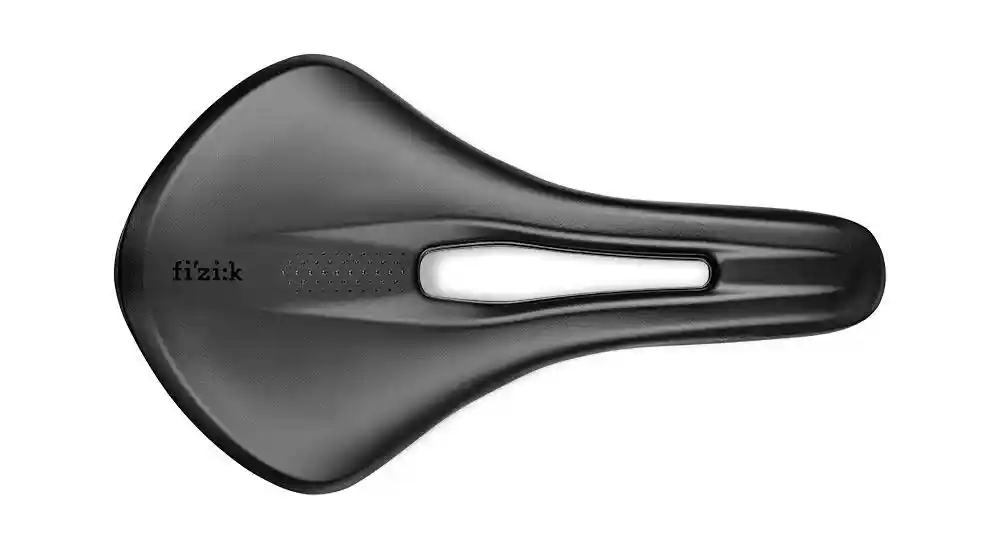
Guidance published by major saddle manufacturers consistently ranks shape first. Fizik categorizes its range into T-shape (abrupt transition, flatter profile, multiple seating positions), V-shape (gradual flare and cradling tail that assists pelvic rotation) and short-nose (defined seating area with generous sit-bone support and a more planted feel). Selle Italia links flat, neutral and waved profiles to anterior, neutral and posterior pelvic tilt as well as dynamic versus static riding styles. Specialized Body Geometry development and professional fit systems emphasize that even advanced padding or lattice constructions of the wrong shape will still cause discomfort. Soft padding on an incorrect platform simply compresses unevenly and can increase soft-tissue pressure rather than relieve it.
For B2B programs this sequence reduces iteration cost. Specifying shape against a clear rider persona (aggressive road, endurance gravel, upright e-bike, etc.) narrows the shell and foam tooling options early. Width ranges and cover materials can then be layered on top of a validated platform.
Core Shape Families and What They Actually Do

Most performance and mid-range saddles fall into three practical families that brands and manufacturers use in product development.
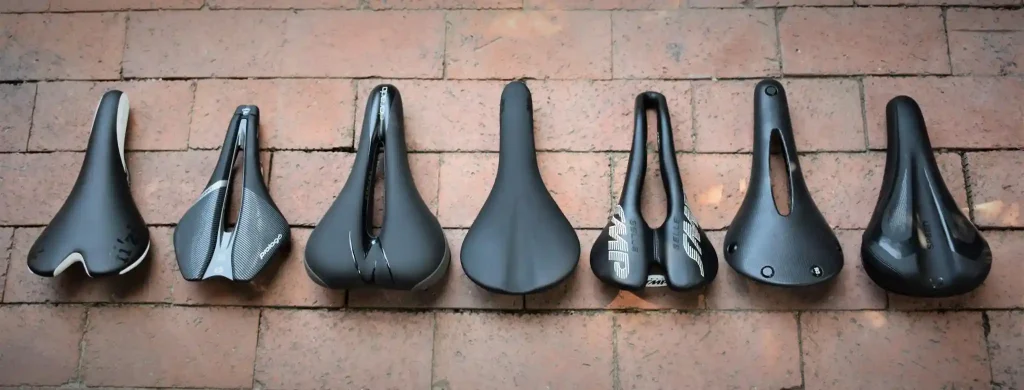
T-shape. An abrupt transition from a longer, narrower nose to the rear platform creates a relatively flat profile and greater inner-thigh clearance. Riders can slide forward or back easily. This geometry suits dynamic riders who change position during a ride—road racers and cross-country mountain bikers are the classic users. The trade-off is less inherent “lock-in”; the rider must actively maintain position.
V-shape. A more gradual flare from nose to rear, often combined with a sloping or cradling tail, assists forward pelvic rotation and provides continuous support. Long-distance and endurance riders frequently prefer this geometry because it stabilizes the pelvis without requiring constant micro-adjustments. The gradual taper reduces abrupt pressure changes when the rider shifts slightly.
Short-nose. A deliberately shortened nose (commonly in the 240–260 mm overall length range) and a well-defined rear platform create a more planted feel and larger sit-bone support area relative to overall length. These designs reduce soft-tissue contact when the rider rotates forward into an aggressive posture. They are popular across modern road, gravel and some triathlon applications. Because the seating zone is more fixed, bike fit and position must already be reasonably dialed; an incorrect fore-aft or tilt can create new problems faster than on a longer traditional saddle.
Hybrid designs exist. Some models blend short-nose length with T- or V-like transitions. Split-nose or noseless platforms form a separate category used mainly for aero-bar or extreme forward positions; they relocate contact to the pubic rami and are not general-purpose solutions.
Related profile language used by manufacturers includes flat, neutral and waved (or curved). Flat profiles favor free movement and higher pelvic flexibility. Waved or more curved profiles cradle the pelvis and suit riders with less flexibility or those who prefer a fixed position. Neutral profiles sit between the two extremes. Matching the profile language to the intended rider’s pelvic tilt and movement style is more useful than marketing terms alone.
Shape Comparison Matrix
| Shape / Profile | Typical Rider Type | Mobility on Saddle | Pelvic Rotation Preference | Primary Benefit | Main Trade-off |
|---|---|---|---|---|---|
| T-shape / Flat | Road race, XC | High | Higher / anterior | Free position changes, thigh clearance | Less inherent stability |
| V-shape / Waved | Endurance, long-distance | Medium | Moderate | Continuous support, cradling | Less freedom to shift |
| Short-nose | Modern road, gravel, aero | Medium-Low | Higher when aggressive | Planted feel, soft-tissue relief | Requires accurate bike fit |
| Neutral | Mixed / versatile | Medium | Neutral | Balance of movement and support | Compromise on extremes |
Pelvic Rotation, Riding Style and Specification Logic
Two variables dominate shape selection once the target use case is defined: how much the rider rotates the pelvis forward and whether the rider is primarily static or dynamic on the saddle.
Higher forward rotation (aggressive road or aero positions) favors flatter, shorter-nose or T-shape platforms that keep soft tissue clear while still supporting the sit bones. Lower rotation (upright or endurance postures) benefits from more rear support and often a waved or V-shaped cradle. Static riders who remain in one place for long periods need a defined platform; dynamic riders need clearance and multiple usable zones.
Gender-specific anatomy and average sit-bone ranges exist, but overlap is large. Typical adult sit-bone widths commonly fall between roughly 90–160 mm, with substantial male–female overlap. Width is typically set by measuring ischial tuberosity distance and adding a posture-dependent offset (commonly 10–30 mm depending on how upright the position is). The critical point for buyers is that width is applied after shape is chosen. A correct width on the wrong shape still produces pressure or chafing complaints.
For product lines this means defining primary rider personas first, then assigning shape families to those personas, then offering two or three widths within each family. Over-proliferation of shapes without clear persona mapping increases inventory risk and confuses both dealers and end users.
Practical Specification Examples
Road-race platform. A brand targeting competitive road riders prioritizes dynamic movement and high pelvic rotation. A T-shape or flat short-nose shell with adequate thigh clearance and a relatively firm platform is the logical starting point. Multiple seating positions along the saddle support position changes during climbs, sprints and descents. Width options are then layered (for example 143 mm and 155 mm) once the shell geometry is fixed.
Endurance or e-bike platform. Riders who spend long hours in a more upright or moderately rotated posture need continuous support. A V-shape or waved profile with a cradling rear section keeps the pelvis oriented and reduces the need for constant micro-adjustments. Slightly greater width offset and multi-density padding become secondary refinements after the shape is locked.
Gravel platform. Mixed-surface riding often combines moderate aggression with the need for stability over rough terrain. A short-nose geometry with a well-defined rear platform and controlled edges around any relief channel provides a planted feel while still allowing some position change. Shell stiffness and rail durability receive extra attention because of vibration and occasional impacts.
These examples illustrate the same sequence: rider persona and posture first, shape family second, width and padding third.
Materials, Construction and Manufacturing Implications of Shape Choices
Shape is realized in the shell. High-volume shells are typically injection-molded nylon or nylon-composite. Carbon shells appear on lighter performance models. Shell stiffness affects power transfer, vibration damping and long-term creep under sustained load. Cutouts or channels require careful edge radius and structural reinforcement so the shell does not flex excessively or crack at the relief feature.
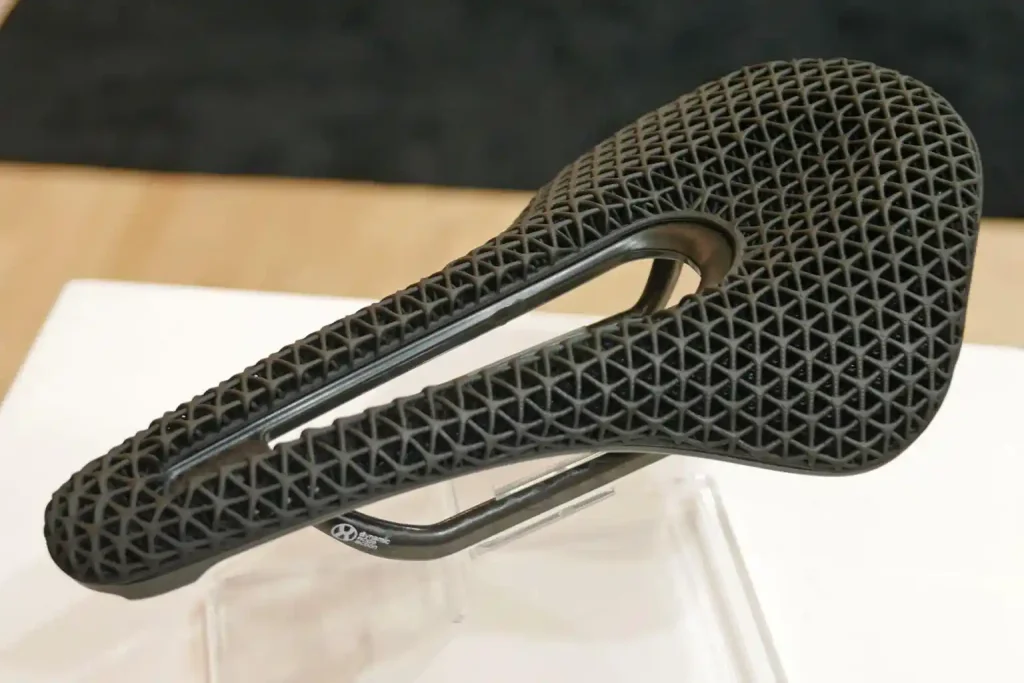
Padding follows the shell. Conventional foam is either cut closed-cell material bonded with adhesive or poured/injected polyurethane. Multi-density or zoned padding adds process steps. 3D-printed lattice structures (commonly TPU-based) allow tunable density zones but change the supply chain, cycle time and quality-control methods. Covers must conform without wrinkles; complex shapes increase the difficulty of consistent tensioning and edge finishing.
Rails (CrMo, titanium or carbon) interface with the shell. The rail-to-shell junction is a common durability checkpoint. Shape changes that alter the shell’s rear geometry can require rail redesign or new insertion tooling.
From a sourcing perspective, dedicated tooling for a unique shape raises NRE and minimum-order quantities. Shared platforms or private-label versions of proven shapes reduce risk and time-to-market. Buyers should request shell stiffness data, sustained-load compression results for foam or lattice, and abrasion resistance of the cover against typical cycling apparel. Edge quality around cutouts and consistency of cover tension are practical quality indicators that appear only after production samples.
Decision Framework for Product and Sourcing Teams
- Define the primary rider persona and posture (aggressive dynamic, endurance static, upright comfort, aero/TT).
- Select the shape family that matches pelvic rotation and movement needs (T for free movement, V or waved for support and cradle, short-nose for planted aggressive positions).
- Set width range from measured or population sit-bone data plus posture offset; offer two or three discrete widths.
- Decide padding strategy (single density, multi-density, lattice) only after shape and width are fixed.
- Evaluate construction and process risks: shell material, rail interface, cutout geometry, cover application method.
- Validate with pressure mapping or structured test-ride feedback on prototypes before locking tooling.
- Document the specification clearly so the supplier cannot substitute a different profile under the same model name.
Common mistakes include starting with a popular consumer model and reverse-engineering only the width, assuming more padding will solve a shape mismatch, or specifying extreme cutouts without verifying edge durability and pressure redistribution.
Supplier Evaluation and Specification Questions
Ask suppliers to describe the intended pelvic rotation and rider movement pattern for each proposed shape. Request the shell mold drawing or critical dimensions that define the transition from nose to rear platform. Confirm whether the shape is a shared platform or dedicated tooling. Review compression-set data for the padding and abrasion results for the cover. For 3D-printed options, obtain the density map and sustained-load performance rather than only visual lattice images. Clarify MOQ, sampling lead time and the change process if a shape revision is required after initial production.
A clear shape-first specification reduces the chance that a supplier will offer a “similar” but functionally different profile to meet price or lead-time targets.
Frequently Asked Questions
Is saddle shape more important than width?
Yes for initial specification. Width supports the sit bones; shape determines whether those bones land on a supportive platform in the rider’s actual posture and whether soft tissue is unloaded. A correct width on the wrong shape still produces discomfort.
What saddle shape works best for gravel bikes?
Many gravel platforms use short-nose geometry with a defined rear platform. It balances a planted feel over rough surfaces with enough support for moderate pelvic rotation. Exact choice still depends on the brand’s target posture and whether riders are expected to shift position frequently.
Can padding compensate for the wrong shape?
No. Extra or softer padding on an incorrect platform often increases soft-tissue pressure once the foam compresses. Shape must be correct first.
How many saddle widths should a brand offer within one shape family?
Two or three discrete widths cover the majority of the adult sit-bone range for a given posture while keeping inventory manageable. Offering every possible millimeter increment usually creates more SKU complexity than comfort benefit.
Should every product line have its own unique shape?
Not necessarily. Shared or proven platforms reduce tooling cost and quality risk. Unique shapes are justified when the rider persona or brand differentiation requires geometry that existing platforms cannot deliver.
Practical Next Steps for Buyers
Shape is the variable that most directly controls whether a saddle supports the sit bones or loads soft tissue under the intended riding posture. Width, padding, rails and cover materials refine an already correct platform; they cannot rescue an incorrect one. Brands and OEM programs that define rider personas, lock shape families early, and treat width as a secondary sizing decision produce more consistent comfort outcomes and fewer post-launch corrections.
A good sourcing decision starts with knowing which specifications actually matter before asking suppliers for quotations. Clear shape language, documented pelvic-rotation assumptions and measurable acceptance criteria for shell, foam and cover turn an abstract comfort goal into an actionable technical brief.