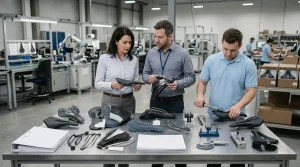
The best bicycle saddle cover for a B2B program is not simply the cheapest product labeled “waterproof.” Buyers should specify the material, coating, water-resistance requirement, fit, retention, branding and quality criteria before comparing suppliers.
A practical sourcing sequence is:
define the application → specify performance → test samples → qualify suppliers → lock acceptance criteria.
This reduces common problems such as coating failure, loose elastic, dimensional variation, damaged printing and unsupported sustainability claims.
1. Start With the Application
The correct specification depends on how the cover will be used.
Promotional programs usually prioritize low cost, lightweight construction, easy fitting, printability and compact packaging.
Commuter products need stronger emphasis on weather resistance, secure retention, repeatable fit and print durability.
Fleet or rental applications may require better abrasion resistance, elastic recovery, dimensional consistency and resistance to repeated handling.
Private-label products add requirements for branding, packaging, labeling and, where applicable, sustainability documentation.
The first sourcing question should therefore be:
What does the cover need to do?
2. Material Selection
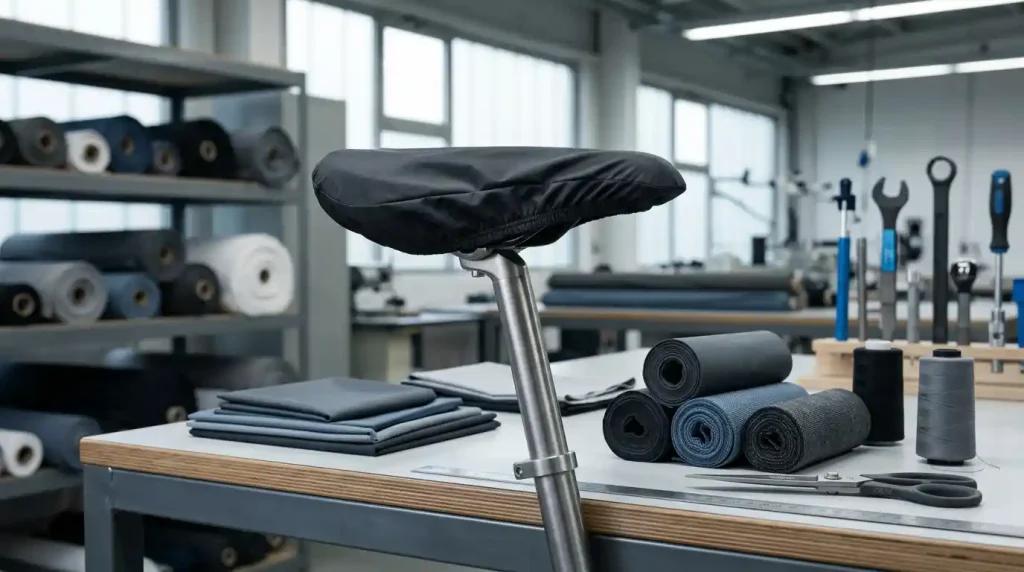
There is no universally best bicycle saddle cover fabric. Buyers should compare the complete material system rather than a fabric name alone.
Polyester
Lightweight woven polyester is widely used because it offers a practical balance of cost, handling and printability.
Terms such as 190T or 210D do not by themselves guarantee performance. Fabric construction, weight, weave, coating and finishing all matter.
A better RFQ specifies the construction, coating and required performance rather than simply saying “210D waterproof polyester.”
RPET
RPET can support recycled-material positioning, but the term itself does not prove a certified sustainability claim.
For programs requiring verified recycled content, ask for current certification information and relevant supply-chain documentation. Textile Exchange is transitioning its standards system toward the Materials Matter Standard, which becomes effective December 31, 2026, with mandatory implementation for applicable Tier 4 audits from December 31, 2027. (Textile Exchange)
RPET also does not automatically mean better durability. Coating, fabric construction, sewing and manufacturing quality still determine physical performance.
Heavier coated constructions
Heavier or Oxford-style fabrics can be useful for demanding outdoor or fleet applications, but they may increase cost, weight and shipping volume.
More material is not automatically better; it must match the use case.
3. Waterproofing: Specify the Test Method
“Waterproof” is not a complete technical specification.
Ask the supplier for:
test method + result + material/product identification.
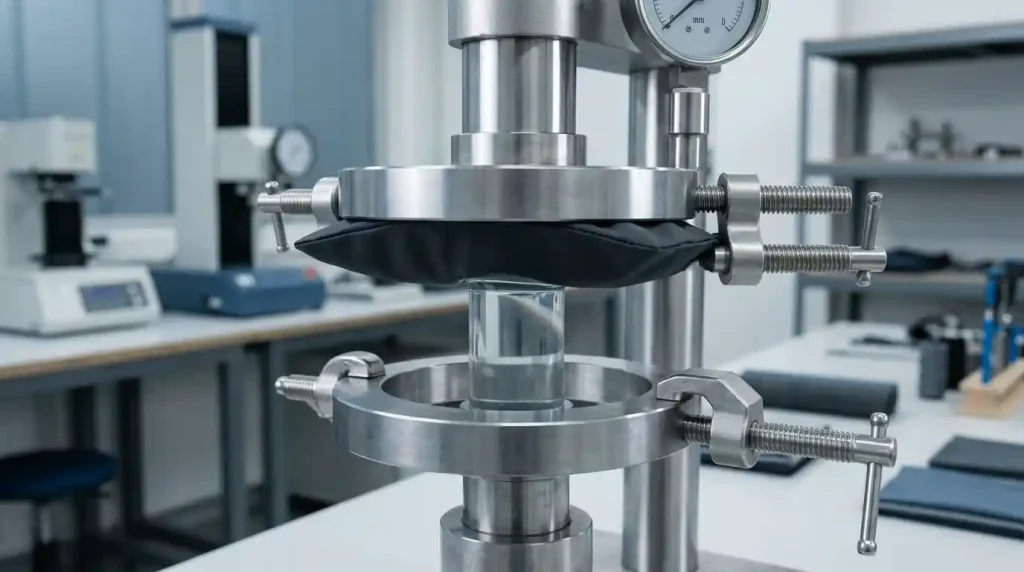
ISO 811:2018 defines a hydrostatic-pressure method for determining textile resistance to water penetration. AATCC TM127 is another recognized hydrostatic-pressure method. (ISO; AATCC)
These are test methods, not universal product ratings. The required performance should be based on the intended application.
Also remember that fabric performance is not necessarily finished-product performance. Water can enter through:
Seams
Stitching
Open edges
Drawcord channels
Construction gaps
For demanding applications, inspect or test the assembled cover as well as the fabric.
4. Fit and Retention
“Universal fit” is a marketing term, not an engineering specification.
Fit depends on:
Saddle length
Width
Nose shape
Rear profile
Curvature
Thickness
A professional specification should define a target dimensional range and validate it on representative saddles.
At minimum, sample testing should cover different geometries such as narrow road, medium hybrid and wider comfort saddles.
Check:
Installation and removal
Nose and rear coverage
Elastic tension
Movement
Wrinkling
Contact with rails and hardware
Elastic vs. Drawcord
Elastic: simple, fast and cost-effective, but recovery must be controlled.
Drawcord: offers greater adjustment but adds components, assembly and cost.
Choose the retention system according to the required fit range.
5. OEM, Printing and Packaging
For an initial private-label program, an established cover construction with customized branding is often lower risk than immediate exclusive tooling.
Typical customization includes:
Logo printing
Brand colors
Reflective elements
Labels
Packaging
Printing should be evaluated on the finished cover, because stretching and folding can affect appearance and durability.
Packaging should also be specified early because it affects labor, freight volume and retail readiness.
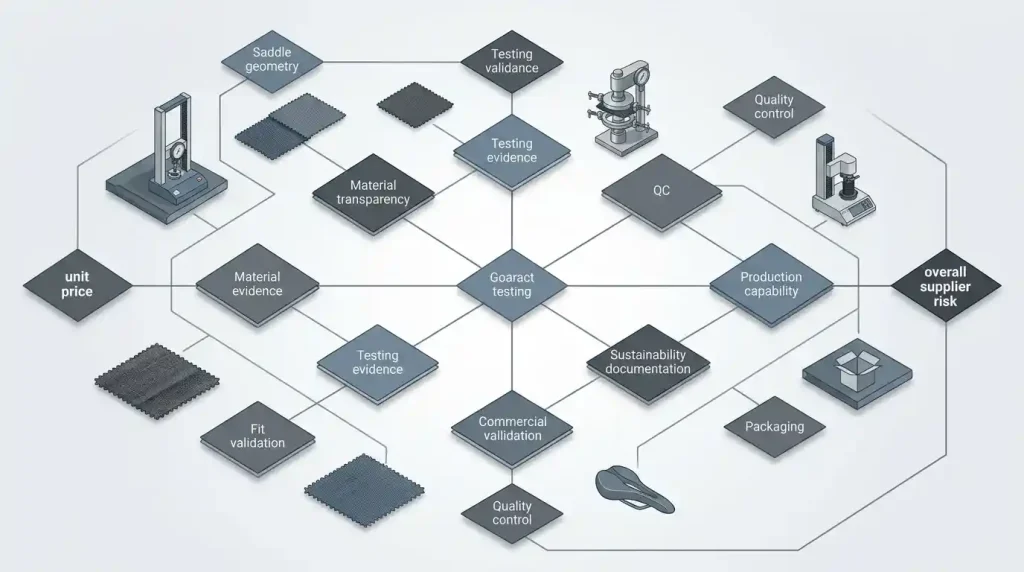
6. How to Evaluate a Supplier
The key question is:
Can the supplier reproduce the approved specification consistently at production volume?
Evaluate:
Material transparency
Can the supplier identify the fabric, coating and relevant documentation?
Testing
Can the supplier provide credible evidence for water resistance and other critical requirements?
Sampling
Does the supplier understand the application, saddle dimensions, branding and packaging?
Quality control
Ask how the factory controls:
Materials
Dimensions
Sewing
Printing
Elastic
Final appearance
Packaging
Production capability
Confirm actual production capacity, lead time and which processes are handled in-house or outsourced.
7. Common Failure Modes
Coating failure
A cover may look waterproof when new but deteriorate after repeated flexing or exposure.
Response: specify the material system and validate representative samples.
Elastic deterioration
The cover may fit initially but become loose after repeated use.
Response: evaluate recovery and repeated-use performance.
Dimensional drift
Small size changes can significantly affect fit.
Response: define critical dimensions and tolerances.
Print damage
A logo may crack or peel when the cover stretches.
Response: test the printed finished product.
Seam leakage
The fabric may resist water while stitched areas leak.
Response: inspect seams and, where necessary, test the complete product.
Unsupported RPET claims
“RPET” does not automatically establish a certified recycled-content claim.
Response: verify current certification and supporting documentation.
8. Hypothetical OEM Example
Consider a hypothetical private-label program for commuter customers.
A weak RFQ says:
“Please quote a waterproof saddle cover with our logo.”
A stronger RFQ defines:
Application
Material construction
Water-resistance method
Fit range
Retention
Branding
Packaging
Quality requirements
Documentation
Quantity
The difference is important: suppliers are now quoting the same defined product, making technical and price comparisons meaningful.
9. MOQ, Tooling and Cost Trade-Offs
There is no universal MOQ for custom bicycle saddle covers. It depends on material, construction, color, printing, packaging, tooling and supplier policy.
Ask:
“What is the MOQ for this exact configuration?”
Existing constructions generally provide a simpler starting point. Exclusive tooling becomes more relevant when proprietary geometry or unique construction is required.
Also expect trade-offs among:
low cost + low weight + high performance.
Improving one variable can affect the others. The buyer should decide which priority matters most.
10. RFQ Specification Checklist
A useful bicycle saddle cover RFQ should include:
Item
Requirement
Application
Promotional / commuter / fleet / aftermarket
Material
Polyester / RPET / approved alternative
Construction
Fabric and coating
Water resistance
Requirement + test method
Fit
Saddle size range
Retention
Elastic / drawcord
Branding
Logo, colors, print method
Packaging
Individual / bulk / retail-ready
Quantity
Initial and expected repeat volume
QC
Dimensions and acceptance criteria
Documentation
Test/certification requirements
Delivery
Destination and lead time
11. FAQ
What is the best material for a bicycle saddle cover?
There is no universal answer. Lightweight polyester suits many promotional and general-purpose programs, while heavier constructions may better suit demanding outdoor use. RPET is useful when verified recycled content is part of the product strategy.
Are RPET saddle covers waterproof?
RPET describes recycled polyester content. Waterproof performance depends on the fabric, coating, seams and finished construction.
What water-resistance test should suppliers provide?
ISO 811:2018 and AATCC TM127 are recognized hydrostatic-pressure methods. The buyer should still define the required performance according to the application.
What is the typical MOQ?
There is no universal MOQ. Ask for the MOQ of the exact material, construction, branding and packaging configuration.
Can saddle covers be OEM or private label?
Yes. Common options include logo printing, colors, reflective details, labels and packaging.
Conclusion
Reliable bicycle saddle cover sourcing starts with a specification, not a catalog.
Define the application, material, coating, water-resistance requirement, fit, retention, branding, packaging and QC criteria before comparing suppliers.
That turns “waterproof” into a measurable requirement, “universal fit” into a defined range, and “good quality” into an acceptance standard.
For OEM and private-label programs, prepare those details before requesting quotations.
Define the product. Validate the sample. Compare suppliers against the same requirements. Then negotiate the price.
Practical OEM Inquiry
Provide these ten items when contacting a manufacturer:
Product
Application
Material
Construction
Water-resistance requirement
Fit range
Retention system
Branding
Packaging
Quantity
A clear first specification makes the path from sample to stable production much more predictable.
Sources
ISO 811:2018 — Textiles — Determination of resistance to water penetration — Hydrostatic pressure test. (ISO)
AATCC TM127 — Water Resistance: Hydrostatic Pressure. (AATCC)
Textile Exchange — Materials Matter and standards transition. (Textile Exchange)
Test requirements, certification rules and product claims should be checked against the latest applicable standards and destination-market requirements before mass production.