
A wholesale component price is only one part of a bicycle shop’s purchasing decision. The buyer also needs to know who will answer when a product fails, which records are required, how quickly a replacement can reach the shop, and what happens if a brand changes distributors. This guide gives shops, distributors and OEM buyers a repeatable way to compare that support before they commit to a bulk order.
Key takeaways
- Identify the brand, seller and warranty decision-maker separately. They may not be the same company.
- Ask for the claim route, proof requirements, turnaround target and freight responsibility in writing.
- Check product safety notices separately from routine warranty claims. A safety recall calls for the official remedy.
Why after-sales support belongs in the wholesale quote
A low unit price loses value when a shop spends staff time locating the right claimant, holds defective stock without a decision, or pays unexpected freight for replacements. The practical comparison is the usable delivered cost of the order, including the cost of resolving faults. Tyride’s existing low-cost bicycle parts supplier checklist makes the same purchasing distinction: compare traceable specifications, quality evidence and remedies alongside price.
Usable delivered cost is the cost of parts that can actually be sold or installed after freight, inspection, defects and remedy work are considered. Claim owner is the company responsible for receiving a fault report and making or coordinating the remedy decision. Keeping these two terms separate stops a cheap quote from hiding an expensive support process.
This does not mean every supplier needs an identical policy. A shop ordering stocked accessories may need a fast credit and replacement process. An OEM buyer approving a new saddle design may need batch traceability, an agreed defect definition and a corrective-action process. The RFQ should match the product’s risk and the buyer’s use case.
What the BTI and Knog Reddit case actually shows
In an April 25, 2026 r/BikeMechanics post, a shop worker described buying a run of Knog lights through an earlier distributor. After one Blinder 1300 stopped working, the shop was directed among the previous distributor, the brand and BTI, which had become the current distributor. According to the poster, BTI requested proof of purchase and the light’s batch code, then arranged a replacement that reached the shop quickly. The poster said the experience made them more willing to stock the line.
The comments add a useful qualification. One mechanic preferred BTI’s support but said their shop still ordered more often from QBP because its deliveries reached them sooner. This is a single shop’s account and a few practitioner replies, not measured evidence that one distributor is always faster or better. It does, however, expose the questions a wholesale buyer should ask: who owns a claim after a channel change, and what matters more for this SKU, claim handling or routine replenishment speed?
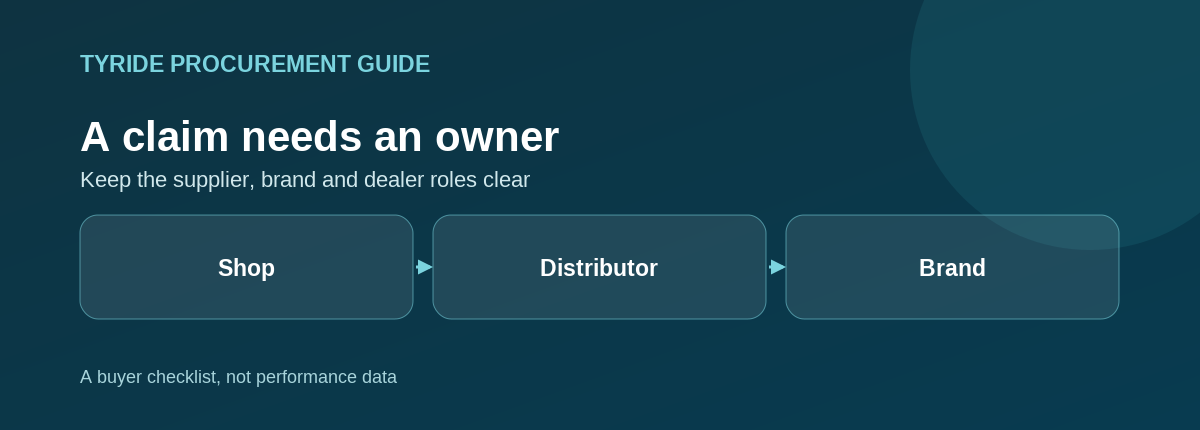
Knog’s published returns and warranty page describes a two-year warranty from purchase for covered defects and directs faulty-product claims to its warranty form. A brand’s public consumer terms are a useful starting point, but a B2B buyer should request the written dealer procedure for its market and account before relying on it for a wholesale program.
Separate three kinds of product problem
The correct response depends on the type of problem. Treating every issue as a simple warranty return can delay the remedy or leave affected goods in circulation.
| Situation | First action | Record to keep |
|---|---|---|
| Individual product appears defective | Isolate the item and follow the agreed claim route | SKU, lot or batch, invoice, fault description and photos |
| Multiple units show the same fault | Pause release of the affected lot and ask for a documented investigation | Lot range, inspection results and supplier response |
| Product is subject to a safety recall | Follow the official recall instructions for the exact model and batch | Affected stock count, customer notification and remedy records |
The distinction is concrete for lights. The US Consumer Product Safety Commission’s Knog Blinder 900 and 1300 recall identifies specific batch codes and instructs consumers to stop using affected units and seek the recall remedy. The Reddit post does not establish that its failed light was in a recalled batch. Buyers should check the official model and batch criteria rather than infer a connection from the product name.
Six warranty questions to send before a bulk purchase
Send the same questions to each candidate supplier. Comparing written answers is more useful than comparing broad claims such as “full warranty support.”
- Who accepts the claim? Name the legal seller, brand contact and distributor contact for the destination market.
- Which products and faults are covered? Request the policy version, start date, exclusions and any difference between consumer and dealer terms.
- What proof is required? Confirm the invoice, serial or batch code, images, test results and whether the original packaging is needed.
- What is the remedy? Specify repair, replacement, credit or refund, and who chooses among them.
- Who pays and how long does it take? Ask who covers return freight, replacement freight, inspection and customs charges, plus the target response and resolution times.
- What changes if the distributor changes? Require a named route for claims on stock bought from the previous channel.
For an OEM program, connect these questions to an approved specification. A supplier cannot judge whether a saddle rail, shell or cover is nonconforming without a controlled baseline. Tyride’s bicycle saddle OEM specification guide shows the product details buyers can define before sampling and production.
Put the answer into the purchase order
An email assurance is easy to lose when the account manager, factory or distributor changes. Attach a short after-sales schedule to the purchase order or supply agreement. It should identify the approved SKU and revision, coverage period, claim evidence, decision owner, response target, remedy, freight allocation and escalation contact. If a failure may affect a full lot, include the lot isolation and corrective-action process.
For example, an illustrative first order might define a 48-hour acknowledgement target and require a credit or replacement decision after the supplier receives a complete claim file. Those are negotiating terms, not measured industry averages. The buyer and supplier should agree on targets they can actually meet.
This is a procurement control, not a guarantee of zero defects. It gives both sides a common record when something goes wrong. Tyride’s bicycle parts compatibility checklist is a useful companion for recording the approved assembly before a volume order, since an incompatible part and a defective part require different investigations.
A simple supplier comparison worksheet
Use one row per supplier and exact product configuration. Leave an unanswered field blank rather than treating a marketing claim as a confirmed term.
| Decision field | Supplier A | Supplier B | Evidence to request |
|---|---|---|---|
| Exact SKU and revision | Quote and drawing | ||
| Claim decision-maker | Dealer policy or named contact | ||
| Proof and batch requirements | Claim form and traceability example | ||
| Response and remedy target | Written service terms | ||
| Return and replacement freight | Written cost allocation | ||
| Local replenishment lead time | Recent fulfilment commitment | ||
| Recall notification route | Brand or supplier procedure |
If a seller cannot explain how a defective unit moves from report to decision, make a small trial order or resolve the gap before placing a larger one. For a broader view of Tyride’s stated role in saddle manufacturing and coordinated component sourcing, see About Tyride.
Frequently asked questions
Is a manufacturer’s consumer warranty enough for a wholesale order?
No. It establishes a public baseline, but a shop or distributor should confirm the dealer claim route, required records, remedy and freight terms for its account and market. The brand’s public terms illustrate the type of baseline to review; the actual B2B procedure should be obtained directly.
Should a shop return recalled stock through the normal warranty channel?
Follow the official recall instructions first. A recall can have batch-specific stop-use, notification and replacement steps that differ from an ordinary fault claim, as the Knog notice cited above demonstrates.
What should a first wholesale trial prove?
The trial should show that the supplier delivers the approved specification, preserves batch identification and responds to a documented claim through the promised channel. A successful sample alone does not prove that the support process works at volume.
Next step for buyers
Put the six questions above beside the price and lead-time fields in your next RFQ. For a saddle or multi-component program, send Tyride the specification, expected order volume and the after-sales evidence you require through its contact page. Compare the written response against the same checklist used for every other bidder.
Editorial method: This article uses one dated Reddit shop account as a case, Knog’s public warranty terms and the CPSC’s official recall notice. It does not treat the Reddit account as evidence of typical supplier performance or connect that specific failed light to the recall.