
A campus rental fleet needs more than a low per-bike price. The buyer must match bicycle types to campus routes, fit a range of riders, plan maintenance and replacement parts, and decide who will keep the fleet available after delivery. A Reddit post asking where to buy 20 wholesale city bikes for student rentals shows how quickly a bulk purchase turns into an operational question.
This guide is for colleges, campus mobility teams, rental operators, and bicycle suppliers preparing a small fleet purchase. It turns the Reddit case into a procurement checklist and separates a one-time acquisition from the continuing work of keeping bicycles rideable.
Key takeaways
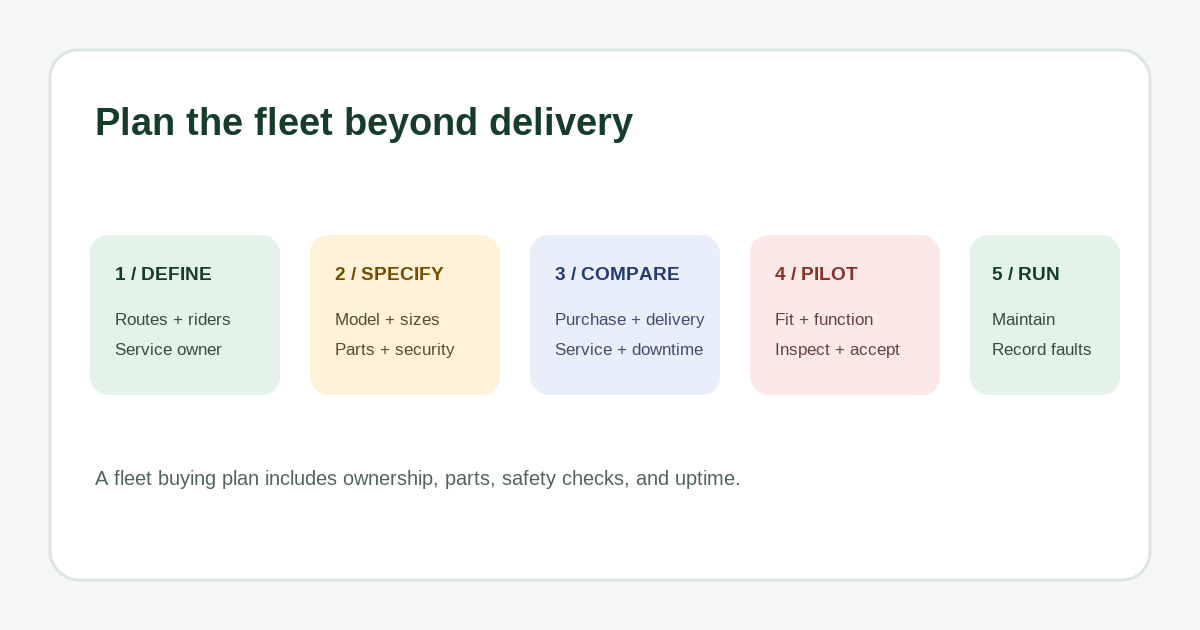
- Define the routes, rider needs, operating hours, and fleet service model first.
- Compare total ownership cost, not just the initial unit price.
- Standardize models and service parts where that supports maintenance.
- Pilot the specification and document acceptance checks before the full order.
The Reddit case: 20 three-speed city bikes for students
In September 2023, a Reddit user in r/BikeShop asked where to buy 20 wholesale three-speed city bicycles for students to rent at a local college. One reply suggested that the school might already have a relationship with a local bike shop, brand, or sales representative. Another commenter described a campus maintenance relationship that later expanded to other campuses. For example, a campus may know the target fleet quantity while the maintenance team has not yet named who will inspect and repair returned bicycles. The discussion is small and anecdotal, but it highlights two practical issues: a buyer needs a source and a plan for service. Read the Reddit thread.
The question does not establish that 20 is the right fleet size, that three-speed bikes fit every campus, or that any supplier is qualified. Start with a usage plan and use the quantity as the example it is: one buyer’s initial requirement.
Define the service before choosing a bicycle
List where the bikes will be used, who can rent them, the expected trip length, terrain, storage, charging needs if electric, and how riders report faults. Identify the responsible operator for booking, locks, inspections, repairs, and out-of-service units. If the campus has different zones or user groups, determine whether one bicycle specification can serve them all.
Ask facilities and maintenance staff to review the proposal before the purchase order. They will know which routes include steep grades, stairs, rough pavement, limited storage, or secure parking. A bicycle that is technically suitable but difficult to store or maintain may not stay in service. For instance, a campus with steep routes should check gearing and braking during the pilot rather than assume a city-bike label proves suitability.
Compare purchase price with fleet operating cost
A simple whole-life comparison includes:
- Purchase price and delivery.
- Assembly, accessories, locks, and identification labels.
- Routine inspections and expected service labor.
- Common replacement parts and consumables.
- Storage, security, and charging equipment where required.
- Warranty handling, downtime, and end-of-life disposal or resale.
Do not insert speculative savings as facts. Ask vendors to quote the same specification and separate included items from optional services. A fleet contract might include scheduled maintenance, but the owner should confirm response times, exclusions, and replacement-bicycle rules in writing.
The U.S. Consumer Product Safety Commission explains bicycle requirements for covered bicycles, including assembly, braking, structural integrity, and reflectors. Applicable rules depend on market and product scope; consult the current requirements for the fleet’s destination and bicycle type. Read the CPSC bicycle FAQ.
For a broader discussion of how local rider demand affects model-size coverage, see the bike shop size inventory guide.
Standardize the fleet where it helps service
A consistent fleet can reduce training and parts complexity. Choose a small number of models and components that fit the intended routes and user group. Standardization should not force every rider into one unsuitable size. Set a size range, then check whether riders can adjust saddle height and controls safely. Keep a record of each bicycle’s frame size, serial number, and installed parts.
The components plan should cover high-use replacement items and the exact versions installed. Tyride’s bicycle parts compatibility checklist helps document fit before sourcing volume. For broader sourcing support, review the component supply service and confirm which parts, lead times, and quantities are available for the fleet.
Request comparable supplier proposals
Send each candidate the same requirements:
| Requirement | Information to request |
|---|---|
| Fleet use | Routes, terrain, trip length, rider group, daily operating hours |
| Bicycle specification | Model, size range, drivetrain, brakes, accessories, and finish |
| Quantity | Unit price tiers, minimum quantity, and spare-unit options |
| Delivery | Assembly state, destination, delivery schedule, and excluded charges |
| Service | Inspection frequency, repair response, warranty process, and replacement policy |
| Parts | Exact installed parts, maintenance kit, availability, and replenishment lead time |
| Acceptance | Serial-number list, assembly check, safety inspection, and defect process |
If you are importing into the United States, CBP guidance says commercial invoice documentation includes an adequate goods description, quantity, and value. Buyers should confirm the current import paperwork and classification requirements for their transaction. CBP commercial invoice guidance.
Pilot, inspect, then release the full fleet
If timing and budget allow, approve one representative bicycle or a small pilot before accepting the full shipment. Test fit, braking, shifting, security hardware, and storage arrangements on the actual campus. Log any changes to the specification and ensure the delivered fleet matches the approved configuration.
At receipt, match the bicycle count and serial numbers against the order. Check for damage, missing accessories, and assembly issues. Keep bikes with unresolved faults out of rental use until repaired. Record each issue, supplier response, and time to resolution; those records will improve the next order.
A campus fleet purchase checklist
- [ ] Routes, riders, and operating model are defined.
- [ ] Size range and bicycle specification are approved by users and maintenance staff.
- [ ] Purchase, delivery, service, and replacement costs are compared.
- [ ] Supplier proposals use the same scope and acceptance rules.
- [ ] Common repair parts and replenishment lead times are documented.
- [ ] Pilot or pre-delivery inspection is planned.
- [ ] Serial numbers, warranty process, and maintenance ownership are assigned.
A fleet purchase is successful when the bicycles keep serving the intended trips, not simply when the shipment arrives. Send Tyride the proposed fleet requirements and parts list if you need to discuss bicycle-component sourcing. The Tyride overview explains the company’s stated role in bicycle manufacturing and component sourcing.
Methodology: We treated the Reddit post as a starting use case, then organized the checklist around requirements, total ownership cost, acceptance, and upkeep. No campus fleet records or vendor performance data were supplied.
Methodology: We treated the Reddit post as a starting use case, then organized the checklist around requirements, total ownership cost, acceptance, and upkeep. No campus fleet records or vendor performance data were supplied.
Evidence note: The Reddit thread is a 2023 individual buyer question and replies, not a vendor assessment or fleet benchmark. The CPSC source applies within its stated U.S. regulatory scope. The checklist is a proposed procurement method; no fleet performance data was provided.